By Anpel Team | 27 August 2020 | 1 Comments
Spectrum experiment to guard your SPE column flow rate
Spectrum experiment to guard your SPE column flow rate
In the use of SPE columns, many teachers will doubt the flow rate. Under normal conditions, we require a normal flow rate of 0.5 to 1 drop per second. The slow flow rate leads to long experimental period and fast flow rate, which may lead to unstable recovery rate. Today, let's discuss the factors that affect the SPE velocity.
According to the video content, Xiaobian has also sorted out the main reasons that affect the SPE column flow rate. Let's have a look~

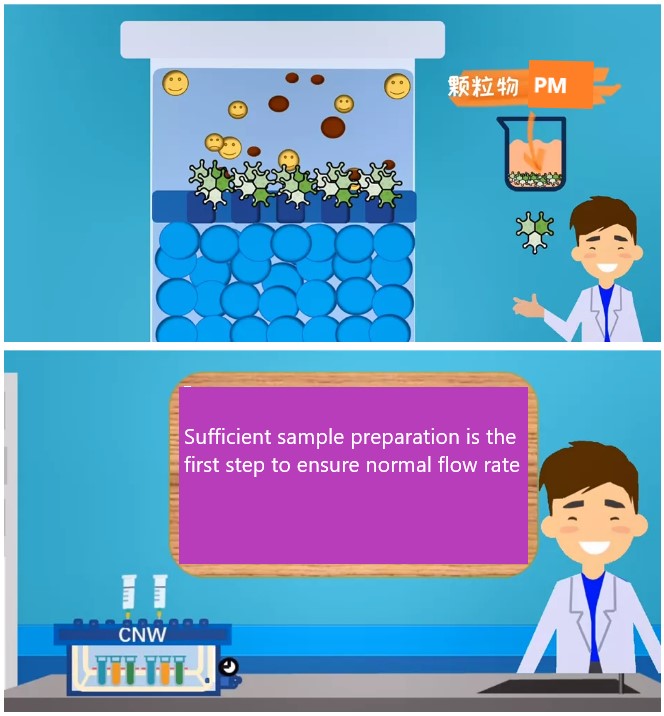
Most flow rate problems are due to inadequate sample preparation. For example, the sample is turbid, and the sieve plate is blocked due to insufficient centrifug alfiltr ation, or the protein and other macromolecular substances of the sample are not fully treated and effective protein sedimentation is not carried out, resulting in the blockage of sieve plate. The flow velocity problem caused by this kind of reason can be solved by improving the pretreatment method. Therefore, sufficient sample preparation is the first step to ensure the normal flow rate of SPE.

1.Effect of packing particle size
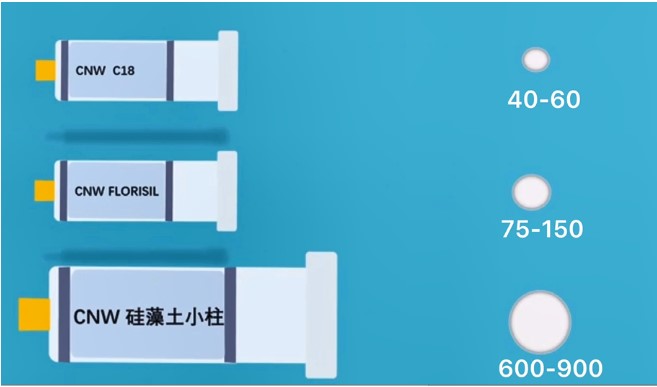
The larger the particle size of packing is, the looser the packing is, the smaller the resistance of convective phase is and the faster the velocity is; the smaller the particle size is, the more co mpact the packing is and the slower the velocity is. This phenomenon is very obvious on Florisil and diatomite columns. Generally, the particle size range of small column filler is 40-60UM, the particle size range of Florisil is 75-150um, and that of macroporous diatomite column is 600 - 900 um. Therefore, the flow velocity of Florisil and diatomite columns will be faster than that of ordina ry columns, especially for macroporous diatomite columns, which need to be equipped with a gui de needle in the package to control the flow rate.
2.Influence of column volume
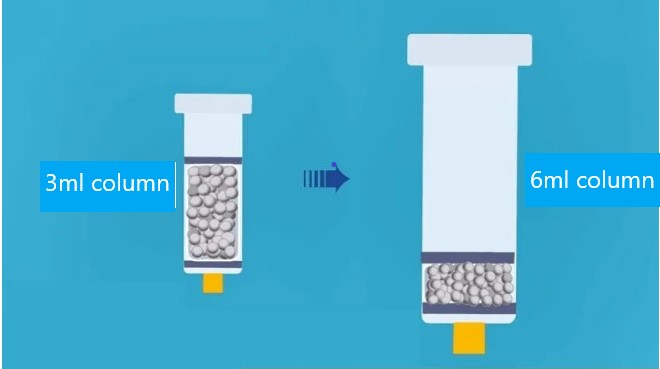
For the same kind of packing, the smaller the volume of the column, the slower the flow rate. This is because the smaller the volume of the column, the smaller the cross-section and the hig her the filling height, the resistance of the mobile phase will increase, resulting in the slower flow rate. Therefore, in the actual detection work, if the sample loading volume and flow rate are requi red, under the premise of not affecting the solid-phase extraction effect, the large volume column tube or high-throughput membrane device can be selected. The sample loading speed of CNW disk can reach 50ml / min, which has obvious advantages in the treatment of large-scale water samples.

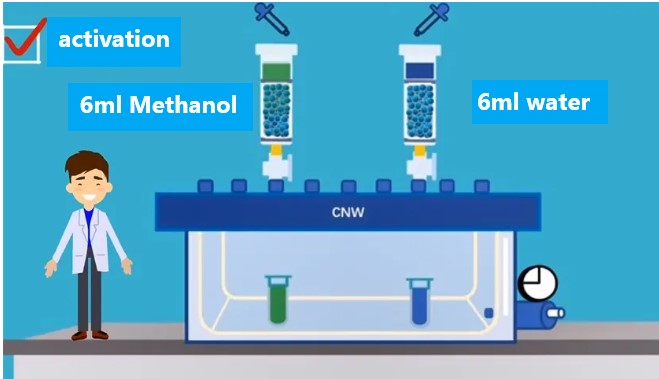
The choice of solvent is easy to be ignored by many teachers in the process of experiment. For example, C18 column is generally activated with methanol. If activated with water, due to the hydrophobicity of C18, the infiltration speed of water will be slo wer than that of methanol, resulting in slower flow rate. In this case, adjusting the acti vation solvent can solve the problem.
The order of solvent use also affects the flow rate. For example, the activation solvent is dichloromethane, and the equilibrium solvent is water. Because dichlorom ethane and water are not mutually soluble, the flow rate will be very slow during the activation equilibrium. In this case, we suggest adding the transition solvent methanol between the two immiscible solvents to solve the problem.

The air layer will block the flow path of the liquid, resulting in velocity problems. The main reason for the formation of air layer is the looseness of sieve plate or filler. The commercialized products are transported to the user's hands. In the process of transportation, if the displacement between the filler and the sieve plate is loose, it is easy to form an air layer. This kind of air layer is sometimes obvious, and faults or cra cks can be seen in the filler. Sometimes the looseness is not obvious, and the differe nce of flow rate can only be felt in the process of using the small column. In this case, the slight loosening problem can be solved by compacting the sieve plate or applying positive negative pressure to drive away the air.
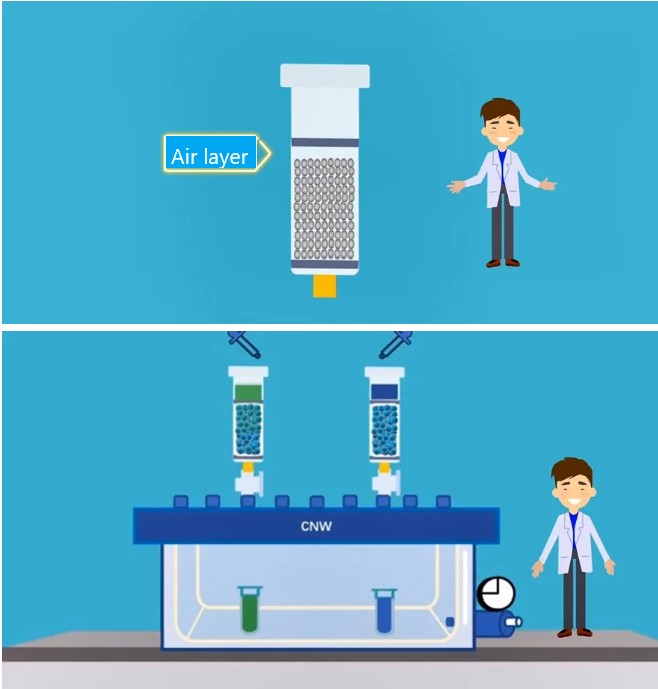
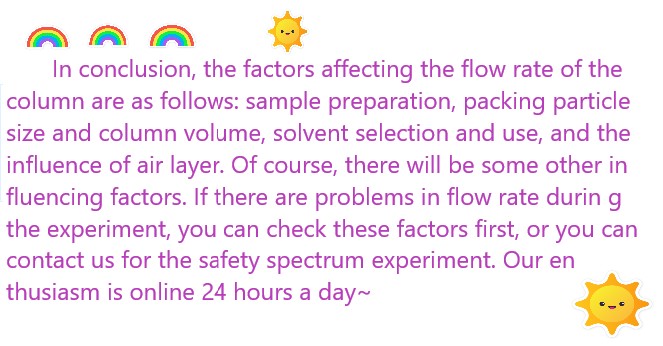
In addition to the possible loosening of sieve plate during transportation, if the solvent is not carefully dried during the activation equilibrium phase of SPE elution process, air will enter into the packing, which will affect the flow rate. At this time, the problem can be solved by pressing or vacuuming the air.
In the use of SPE columns, many teachers will doubt the flow rate. Under normal conditions, we require a normal flow rate of 0.5 to 1 drop per second. The slow flow rate leads to long experimental period and fast flow rate, which may lead to unstable recovery rate. Today, let's discuss the factors that affect the SPE velocity.
According to the video content, Xiaobian has also sorted out the main reasons that affect the SPE column flow rate. Let's have a look~
Most flow rate problems are due to inadequate sample preparation. For example, the sample is turbid, and the sieve plate is blocked due to insufficient centrifug alfiltr ation, or the protein and other macromolecular substances of the sample are not fully treated and effective protein sedimentation is not carried out, resulting in the blockage of sieve plate. The flow velocity problem caused by this kind of reason can be solved by improving the pretreatment method. Therefore, sufficient sample preparation is the first step to ensure the normal flow rate of SPE.
1.Effect of packing particle size
The larger the particle size of packing is, the looser the packing is, the smaller the resistance of convective phase is and the faster the velocity is; the smaller the particle size is, the more co mpact the packing is and the slower the velocity is. This phenomenon is very obvious on Florisil and diatomite columns. Generally, the particle size range of small column filler is 40-60UM, the particle size range of Florisil is 75-150um, and that of macroporous diatomite column is 600 - 900 um. Therefore, the flow velocity of Florisil and diatomite columns will be faster than that of ordina ry columns, especially for macroporous diatomite columns, which need to be equipped with a gui de needle in the package to control the flow rate.
2.Influence of column volume
For the same kind of packing, the smaller the volume of the column, the slower the flow rate. This is because the smaller the volume of the column, the smaller the cross-section and the hig her the filling height, the resistance of the mobile phase will increase, resulting in the slower flow rate. Therefore, in the actual detection work, if the sample loading volume and flow rate are requi red, under the premise of not affecting the solid-phase extraction effect, the large volume column tube or high-throughput membrane device can be selected. The sample loading speed of CNW disk can reach 50ml / min, which has obvious advantages in the treatment of large-scale water samples.
The choice of solvent is easy to be ignored by many teachers in the process of experiment. For example, C18 column is generally activated with methanol. If activated with water, due to the hydrophobicity of C18, the infiltration speed of water will be slo wer than that of methanol, resulting in slower flow rate. In this case, adjusting the acti vation solvent can solve the problem.
The order of solvent use also affects the flow rate. For example, the activation solvent is dichloromethane, and the equilibrium solvent is water. Because dichlorom ethane and water are not mutually soluble, the flow rate will be very slow during the activation equilibrium. In this case, we suggest adding the transition solvent methanol between the two immiscible solvents to solve the problem.
The air layer will block the flow path of the liquid, resulting in velocity problems. The main reason for the formation of air layer is the looseness of sieve plate or filler. The commercialized products are transported to the user's hands. In the process of transportation, if the displacement between the filler and the sieve plate is loose, it is easy to form an air layer. This kind of air layer is sometimes obvious, and faults or cra cks can be seen in the filler. Sometimes the looseness is not obvious, and the differe nce of flow rate can only be felt in the process of using the small column. In this case, the slight loosening problem can be solved by compacting the sieve plate or applying positive negative pressure to drive away the air.
In addition to the possible loosening of sieve plate during transportation, if the solvent is not carefully dried during the activation equilibrium phase of SPE elution process, air will enter into the packing, which will affect the flow rate. At this time, the problem can be solved by pressing or vacuuming the air.
Recently Reviews
Read MoreLeave a Reply
Your email address will not be published.Required fields are marked. *