By Anpel Team | 07 August 2020 | 0 Comments
Selection and use of manual injection needle
一.Range
In general, the sampling volume shall not be less than 10% of the measuring range. In addition, during the injection, the sample volume is generally three times of the injection volume, and then slowly push to the required injection volume, and then part of the air is pumped in. This prevents the sample in the needle from vaporizing first, resulting in a second injection
二.Sample type
Different physical or chemical properties of the sample lead to different types of injection needles, which are usually related to the injection needle push rod. The injection probe push rod can be divided into standard push rod and air tight push rod.

The standard push rod can only be used for liquid injection, and can not be replaced with each other;
The top of the air tight push rod has a PTFE head, which can form a seal with the needle cylinder, so that the rod head is close to the inner wall of the needle cylinder, which can be used for liquid and gas injection. At the same time, the push rod is replaceable.
1.Needle type
The needle type is the connection between the injection needle tip and the syringe. It can be divided into fixed needle type and replaceable needle type, and there are several kinds of replaceable needle type. The common needle types are as follows:

* The most commonly used needle type
* The needle is fixed on the syringe with adhesive and is not resistant to halogenated hydrocarbon solvents such as dichloromethane.
* Can not tolerate high temperature disinfection.
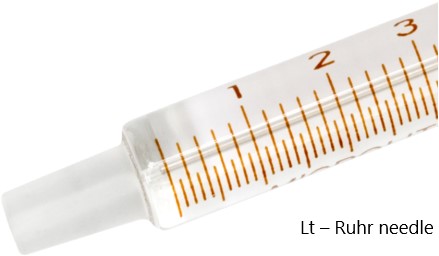
* Ruhr pins for easy and quick replacement.
* It can be sterilized at high temperature (110 ℃).
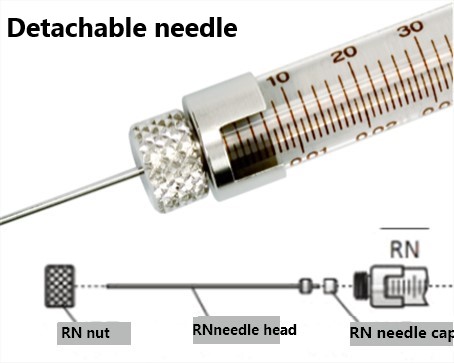
* Adjustable to zero scale
* It is allowed to use different sizes of needles in the same syringe
* Use below 50 ℃
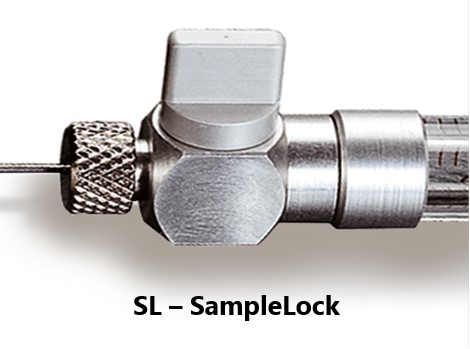
* With replaceable needle on-off valve, it can store gas sample for a short time, and has the best air tightness.
* It is used for sample collection and storage in headspace environment.
2.Needle parameters
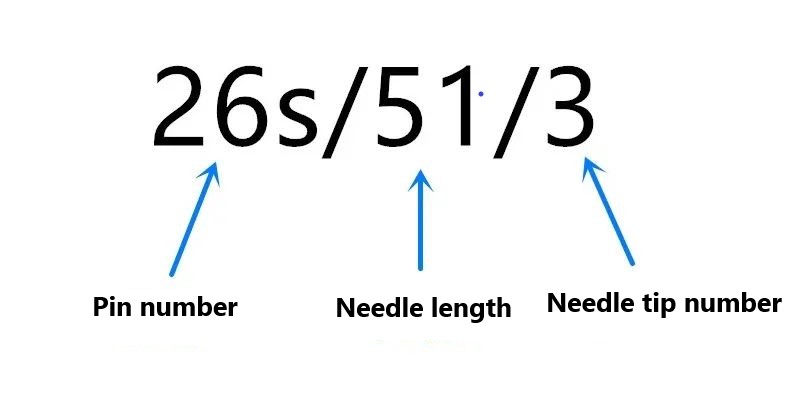
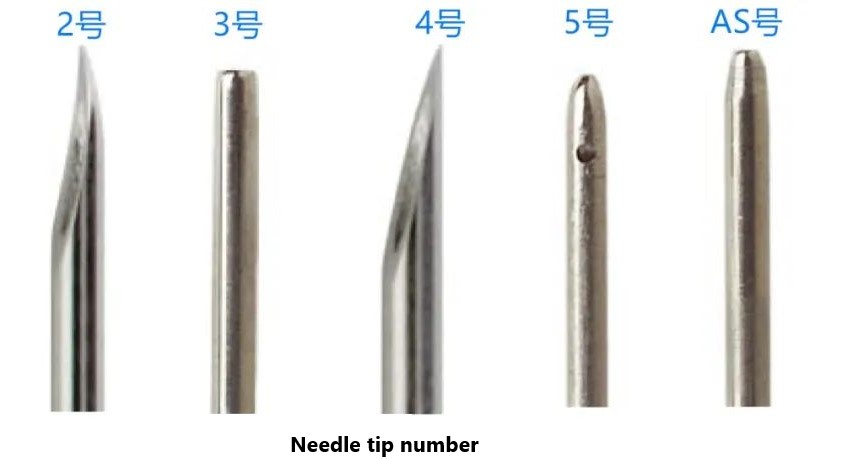
No. 2: needle, for gas phase manual injection, special slope design to prevent spacer debris
No.3: flat needle for HPLC valve injection and sample transfer
No. 4: 10 ° - 12 ° slope, mainly used for biological injection
No.5: conical tip, side opening, for manual injection, no spacer debris
As: special conical tip design for GC automatic injection
Pin number
The needle number is the "thickness" of the injection needle. The larger the number, the thinner the needle.The needle tip number is usually between 20-26. The suffix "s" indicates that the inner diameter of the injection probe is smaller than the standard inner diameter of the injection probe of the same diameter,
such as:
22 : 0.72×0.41mm
Use of injection probe
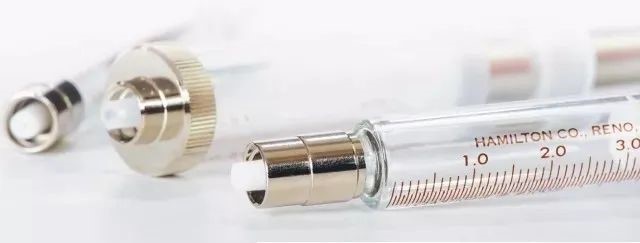
Use of injection probe
☑ Before use, check the injection probe, check whether there are cracks in the syringe and whether there is burr on the needle tip;
☑ Remove the residual sample in the injection probe: wash the injection probe 5-20 times with solvent, and discard the waste liquid from the first 2-3 times;
☑ Remove the bubbles in the injection probe: immerse the needle in the solution and extract the solution repeatedly. If the injection probe is used for a period of time, the bubbles can not be discharged, indicating that the air tightness is poor and the injection probe needs to be replaced;
☑ When using the injection probe, fill up the liquid with the injection probe first, and then remove the excess liquid to the required injection volume.
Cleaning of injection probe
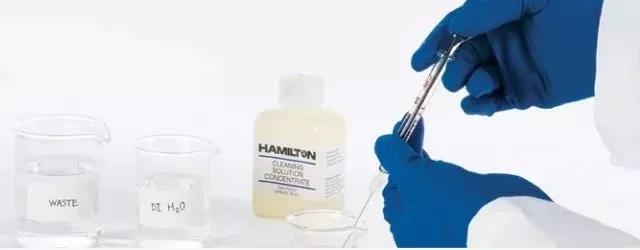
☑ The commonly used cleaning reagents are selected according to the pollutants. Methanol, dichloromethane, acetonitrile and acetone are commonly used detergents. When cleaning, the needle should not be blocked. Take out the plunger, inject the cleaning solvent with another injector, and then insert the plunger to gently push the solvent out of the needle;
☑ Disinfection mode: the plunger must be pulled out when sterilizing with high-pressure sterilizer;
☑ Do not immerse the entire injection probe in the solvent, which will easily damage the adhesion between the syringe and the needle. Clean and wipe the outside with lint free paper or dust-free paper.
Maintenance of injection probe
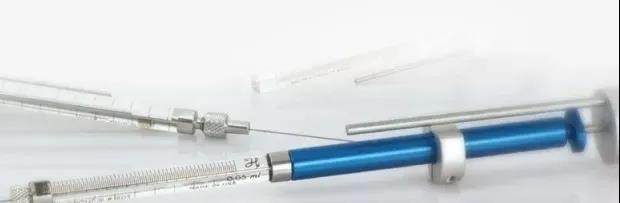
Maintenance of injection probe ☑ Do not force the push rod, especially when the needle is blocked, because high pressure may cause the needle cylinder to break
☑ When the inner wall of the sample injector cylinder is dry, try not to pump and press the push rod, which is very easy to cause wear, which is the reason why the service life of the gas sample injector is short
☑ When cleaning the push rod, use the lint free paper or dust-free paper, do not bend, do not immerse the injection probe in the solvent completely, which may damage the needle joint
☑ The sample with medium to high viscosity should be diluted or the injection needle with large inner diameter should be selected before use
☑ When cleaning the needle, use cleaning tools, such as through pipe thread or tube core needle, tweezers
☑ Hot cleaning can remove organic residues from the needle, especially for trace analysis, high boiling point and viscous substances. The needle cleaning tool can be used after a few minutes of hot cleaning.
* The needle is fixed on the syringe with adhesive and is not resistant to halogenated hydrocarbon solvents such as dichloromethane.
* Can not tolerate high temperature disinfection.
* Ruhr pins for easy and quick replacement.
* It can be sterilized at high temperature (110 ℃).
* Adjustable to zero scale
* It is allowed to use different sizes of needles in the same syringe
* Use below 50 ℃
* With replaceable needle on-off valve, it can store gas sample for a short time, and has the best air tightness.
* It is used for sample collection and storage in headspace environment.
2.Needle parameters
No. 2: needle, for gas phase manual injection, special slope design to prevent spacer debris
No.3: flat needle for HPLC valve injection and sample transfer
No. 4: 10 ° - 12 ° slope, mainly used for biological injection
No.5: conical tip, side opening, for manual injection, no spacer debris
As: special conical tip design for GC automatic injection
Pin number
The needle number is the "thickness" of the injection needle. The larger the number, the thinner the needle.The needle tip number is usually between 20-26. The suffix "s" indicates that the inner diameter of the injection probe is smaller than the standard inner diameter of the injection probe of the same diameter,
such as:
22 : 0.72×0.41mm
22S : 0.72×0.15mm
In general, the larger the range of the injection probe is, the thicker the needle is. Here are some standard needle numbers corresponding to the range:
26S: 5ul and 10ul injection needles
22s: 25-250ul injection probe
Injection probe above 22:500ul
Needle length
Use of injection probe
Use of injection probe
☑ Before use, check the injection probe, check whether there are cracks in the syringe and whether there is burr on the needle tip;
☑ Remove the residual sample in the injection probe: wash the injection probe 5-20 times with solvent, and discard the waste liquid from the first 2-3 times;
☑ Remove the bubbles in the injection probe: immerse the needle in the solution and extract the solution repeatedly. If the injection probe is used for a period of time, the bubbles can not be discharged, indicating that the air tightness is poor and the injection probe needs to be replaced;
☑ When using the injection probe, fill up the liquid with the injection probe first, and then remove the excess liquid to the required injection volume.
Cleaning of injection probe
☑ The commonly used cleaning reagents are selected according to the pollutants. Methanol, dichloromethane, acetonitrile and acetone are commonly used detergents. When cleaning, the needle should not be blocked. Take out the plunger, inject the cleaning solvent with another injector, and then insert the plunger to gently push the solvent out of the needle;
☑ Disinfection mode: the plunger must be pulled out when sterilizing with high-pressure sterilizer;
☑ Do not immerse the entire injection probe in the solvent, which will easily damage the adhesion between the syringe and the needle. Clean and wipe the outside with lint free paper or dust-free paper.
Maintenance of injection probe
Maintenance of injection probe ☑ Do not force the push rod, especially when the needle is blocked, because high pressure may cause the needle cylinder to break
☑ When the inner wall of the sample injector cylinder is dry, try not to pump and press the push rod, which is very easy to cause wear, which is the reason why the service life of the gas sample injector is short
☑ When cleaning the push rod, use the lint free paper or dust-free paper, do not bend, do not immerse the injection probe in the solvent completely, which may damage the needle joint
☑ The sample with medium to high viscosity should be diluted or the injection needle with large inner diameter should be selected before use
☑ When cleaning the needle, use cleaning tools, such as through pipe thread or tube core needle, tweezers
☑ Hot cleaning can remove organic residues from the needle, especially for trace analysis, high boiling point and viscous substances. The needle cleaning tool can be used after a few minutes of hot cleaning.
Leave a Reply
Your email address will not be published.Required fields are marked. *